
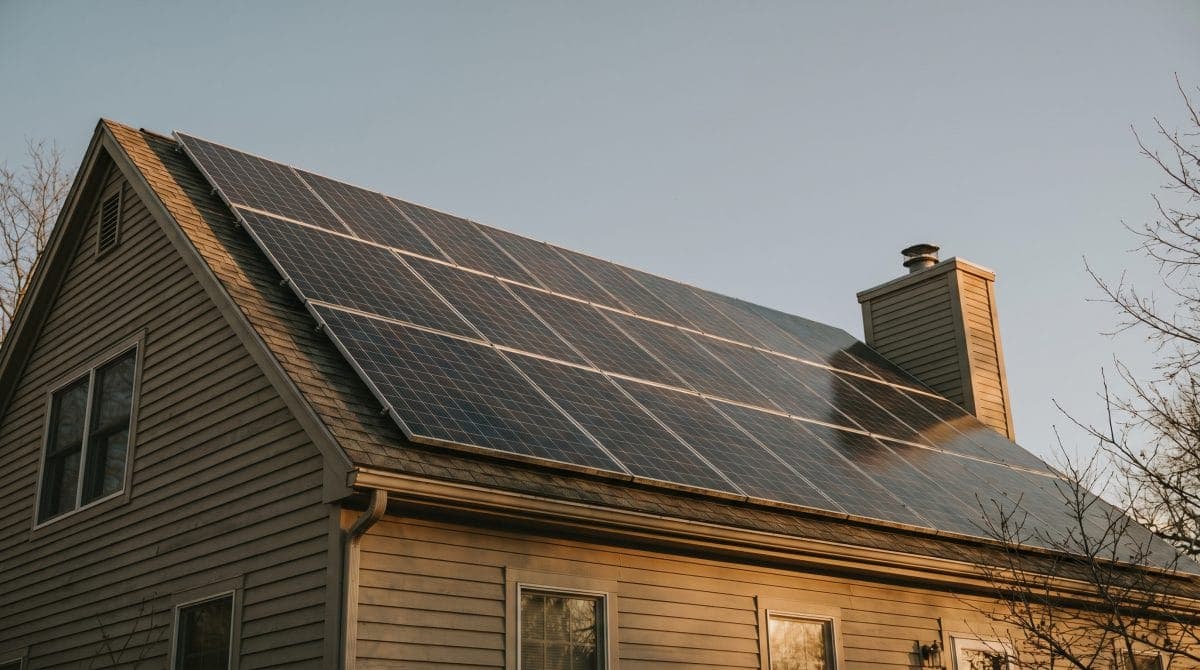
Solar Panels: Real Cost and Payback, Summarized
Residential solar panel systems can reduce or eliminate electric bills, but they come with significant upfront costs, long payback timelines, and a range of variables that affect whether the investment makes financial sense for a specific home. The median installed cost for a residential solar system in the United States was approximately $3.40 to $4.00 per watt as of 2023 (DOE EIA, Lawrence Berkeley National Laboratory Tracking the Sun). For a typical 8-kilowatt system, that translates to roughly $27,200 to $32,000 before incentives. The federal Investment Tax Credit (ITC) currently covers 30% of the installed cost, bringing the net price closer to $19,000 to $22,400 for qualifying homeowners. Payback periods generally range from 6 to 12 years depending on electricity rates, sun exposure, local incentives, and financing terms. This guide walks through the real costs, the math behind payback, and the situations where solar may or may not be a strong financial decision.
What Goes Into the Cost of a Residential Solar System
Hardware
Solar panels themselves typically account for about 25% to 35% of the total installed cost. The remaining expenses include inverters, racking and mounting equipment, wiring, and electrical components. Panel efficiency has improved steadily: most residential panels now convert 19% to 22% of sunlight into electricity, meaning fewer panels are needed to reach a target system size compared to a decade ago.
Labor and Permitting
Installation labor, permitting fees, interconnection costs, and inspections generally make up a substantial portion of the total price. These “soft costs” vary widely by municipality. Some jurisdictions require structural engineering reviews, which can add $500 to $1,500 to the project. Permitting timelines range from a few days to several months depending on local government processes.
System Size
The average U.S. household consumes about 10,500 kilowatt-hours (kWh) of electricity per year (DOE EIA Residential Energy Consumption Survey). In most cases, a system sized between 6 kW and 10 kW covers the majority of that usage. However, homes with electric vehicles, heat pumps, or pools may need larger systems, pushing costs higher.
| System Size | Estimated Cost Range | After 30% Federal ITC |
|---|---|---|
| 5 kW | $17,000 to $20,000 | $11,900 to $14,000 |
| 8 kW | $27,200 to $32,000 | $19,040 to $22,400 |
| 10 kW | $34,000 to $40,000 | $23,800 to $28,000 |
| 12 kW | $40,800 to $48,000 | $28,560 to $33,600 |
Incentives and Tax Credits
Federal Investment Tax Credit (ITC)
The Inflation Reduction Act of 2022 set the residential solar tax credit at 30% of the total installed cost through 2032, stepping down to 26% in 2033 and 22% in 2034 (IRS SOI, IRS Publication 5855). This is a tax credit, not a deduction. It reduces your federal tax liability dollar for dollar. However, if your tax liability in a given year is lower than the credit amount, you may carry the remaining balance forward to subsequent tax years. Homeowners who owe little in federal income tax may find the credit less immediately valuable.
State and Local Incentives
Many states offer additional rebates, tax credits, property tax exemptions, or sales tax exemptions for solar installations. These vary dramatically. Some states provide thousands of dollars in additional support, while others offer little beyond the federal credit. Checking a state’s public utility commission or energy office is typically the most reliable starting point.
Net Metering
Net metering policies allow homeowners to send excess solar electricity back to the grid in exchange for credits on their utility bill. The value of net metering differs by state and utility. In some areas, credits are provided at the full retail electricity rate. In others, credits are calculated at a lower “avoided cost” or wholesale rate. States like California have recently reduced net metering compensation, which lengthens payback timelines for new installations (DOE EIA).
Calculating Payback Period
The payback period is the number of years it takes for cumulative electricity savings to equal the net cost of the system. Here is a simplified example:
- Net system cost after ITC: $20,000
- Annual electricity production: 10,000 kWh
- Local electricity rate: $0.16 per kWh
- Annual savings: 10,000 × $0.16 = $1,600
- Simple payback: $20,000 ÷ $1,600 = 12.5 years
This calculation becomes more favorable in areas with higher electricity rates. In states where the average residential rate exceeds $0.25 per kWh, such as Massachusetts, Connecticut, or California (DOE EIA Electric Power Monthly), simple payback periods may fall below 8 years. In states with rates below $0.10 per kWh, such as parts of the Southeast and Mountain West, payback periods can stretch beyond 15 years or may never fully pay back within the system’s lifespan.
Factors That Shorten Payback
- High local electricity rates
- Strong net metering policies at full retail rate
- Additional state or utility rebates
- South-facing roof with minimal shading
- Rising electricity prices over time (the national average residential rate has increased roughly 2% to 3% annually over the past decade per DOE EIA)
Factors That Lengthen Payback
- Low electricity rates
- Poor net metering compensation
- Significant shading, suboptimal roof orientation, or roof that needs replacement soon
- Financing with high interest rates, which adds to total cost
- HOA restrictions or local regulations that limit system size
Hidden and Ongoing Costs
Solar panels generally require minimal maintenance, but they are not entirely maintenance-free. Inverters typically need replacement once during the system’s 25- to 30-year lifespan, at a cost of $1,000 to $2,500 for string inverters. Microinverters may last longer but cost more per unit to replace. Some homeowners also pay for periodic cleaning, particularly in dusty or pollen-heavy environments.
If a roof needs replacement within the next 5 to 10 years, removing and reinstalling panels adds $1,500 to $5,000 or more to the roofing project. This is a cost that is easy to overlook at the time of solar installation.
Battery storage systems, which allow homeowners to use solar energy during outages or evening hours, add $10,000 to $20,000 to the project. While batteries provide energy independence and resilience, they typically lengthen the financial payback period rather than shorten it.
Impact on Home Value
Research from Lawrence Berkeley National Laboratory and Zillow suggests that owned (not leased) solar panels can increase home resale value. Estimates generally range from $3 to $4 per watt of installed capacity, or roughly $15,000 to $30,000 for a mid-sized system. However, this premium varies by market. Homes in areas with high electricity costs and strong solar adoption tend to see larger premiums. In markets where solar is uncommon or electricity is inexpensive, the premium may be minimal or difficult to realize at sale (FHFA HPI data supplements, Zillow Economic Research).
Leased solar panels or power purchase agreements (PPAs) may complicate home sales. Buyers must agree to assume the lease, and some may be unwilling to do so. This is a meaningful consideration for homeowners who may sell within the first several years.
When Solar May Not Make Financial Sense
- Homeowners in areas with very low electricity rates (below $0.08 to $0.10 per kWh) may find that savings are too small to justify the investment.
- Homes with significant tree shading, north-facing roofs, or limited usable roof area may generate too little electricity to achieve reasonable payback.
- Renters and homeowners who plan to move within 3 to 5 years may not recoup costs, particularly if selling with a lease or PPA.
- Homeowners with low federal tax liability may not be able to take full advantage of the ITC without carrying the credit forward over several years.
- In areas with rapidly changing net metering policies, future savings may be lower than projected at the time of installation.
Financing Options and Their Effect on Total Cost
Cash purchases yield the lowest total cost and the shortest payback period. Solar loans, offered by specialty lenders and some credit unions, allow homeowners to spread costs over 10 to 25 years. Interest rates on solar loans have generally ranged from 4% to 9% in recent years, though this varies with broader market conditions (FRED, Federal Funds Rate trends). A higher interest rate can add thousands of dollars in total cost and push the effective payback period well beyond the simple calculation.
Leases and PPAs eliminate upfront cost but also eliminate ownership of the system. The homeowner pays a monthly fee or a per-kWh rate to the solar company. In most cases, leases and PPAs provide smaller long-term savings than ownership because the solar company retains the ITC and other financial benefits.
About this guide
This guide is educational content produced by HomeRule to help homeowners understand the costs and financial considerations of residential solar panel systems. It is not financial, tax, legal, or investment advice. Solar economics depend heavily on local factors including electricity rates, incentive programs, roof characteristics, and individual tax situations. Consultation with qualified professionals, such as licensed solar installers, tax advisors, and financial planners, is typical and generally advisable before making personal decisions about solar investments.