
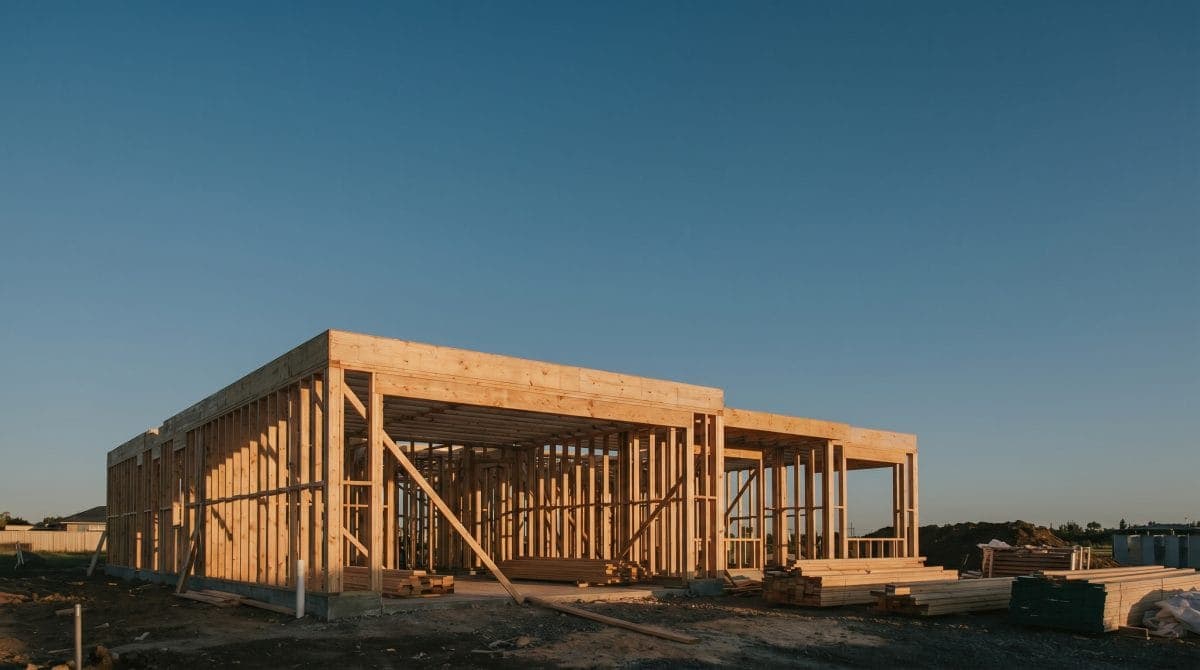
Buying vs. Building a Home: A Summary
Choosing between purchasing an existing home and building a new one is one of the most consequential decisions in homeownership. Each path carries distinct cost structures, timelines, risks, and lifestyle trade-offs. In most cases, buying an existing home is faster and more predictable, while building offers customization and potentially lower near-term maintenance costs. Neither option is universally better. The right choice typically depends on local market conditions, your financial position, your tolerance for uncertainty, and how long you plan to stay in the home. This guide walks through the major factors so you can weigh them with realistic expectations.
Upfront Costs: How the Numbers Compare
According to Census Bureau Survey of Construction data, the median cost of building a new single-family home in the United States was approximately $392,241 (excluding land) in recent years, while the median sale price of a new home sold by builders was roughly $420,800 (Census Bureau, New Residential Sales). For existing homes, the National Association of Realtors reported a median existing-home sale price near $389,800 in 2024. These figures fluctuate by region, and direct comparisons require caution because new construction tends to be larger and include modern features that older homes lack.
Key upfront cost differences generally include the following:
| Cost Category | Buying Existing | Building New |
|---|---|---|
| Land | Included in purchase price | Purchased separately, typically 20% to 30% of total project cost |
| Down payment | Typically 3% to 20% of sale price | Lenders may require 20% to 25% for construction loans |
| Closing costs | Generally 2% to 5% of purchase price | May close twice (construction loan, then permanent mortgage) unless using a one-time-close product |
| Customization | Renovation costs added after purchase | Built into the project budget, though upgrades can escalate quickly |
| Inspections and permits | Home inspection (typically $300 to $600) | Multiple inspections and permit fees throughout construction |
It is worth noting that land costs vary enormously. In rural counties, buildable lots may cost under $50,000, while lots in desirable suburban areas near major metros can exceed $200,000 or more (Census ACS). This single variable can shift the entire cost comparison.
Financing: Different Loan Structures
Financing an existing home typically involves a conventional mortgage, FHA loan, or VA loan. These products are well-established, and rate shopping is relatively straightforward.
Building a home generally requires a construction loan, which operates differently. Construction loans are typically short-term (6 to 18 months), carry variable interest rates that may be higher than standard mortgage rates, and disburse funds in stages as work is completed. Once construction finishes, borrowers typically convert to a permanent mortgage through either a construction-to-permanent loan or a separate refinance. Some lenders offer one-time-close construction loans that simplify this process, though the rates may be slightly higher.
The Federal Housing Finance Agency (FHFA) tracks conforming loan limits, which apply to both purchase and construction financing. However, because total build costs can be uncertain at the outset, lenders may impose stricter qualification standards for construction loans, including higher credit score thresholds and larger reserves (FHFA HPI).
When financing favors buying
- You prefer a fixed, predictable payment from day one.
- Your down payment funds are limited (some purchase loans allow as little as 3% down).
- You want to lock in current interest rates immediately rather than face rate exposure during a build period.
When financing favors building
- You have substantial savings or equity from a prior home sale to fund the construction phase.
- You can secure a competitive construction-to-permanent loan product.
- Local existing-home inventory is so limited that bidding wars inflate purchase prices beyond new-build costs.
Timeline and Predictability
Buying an existing home, from offer to closing, typically takes 30 to 60 days in most markets. Building a home generally takes 7 to 12 months for a standard single-family home, according to Census Bureau Survey of Construction data, though timelines of 12 to 18 months are not uncommon for custom builds or in markets experiencing labor and material shortages.
Delays in construction are a well-documented risk. Supply chain disruptions, weather events, permitting backlogs, subcontractor scheduling conflicts, and unforeseen site conditions (poor soil, drainage issues) can push completion dates back by weeks or months. During this period, you may need to carry the cost of your current housing plus construction loan interest, which can strain a budget.
Buying an existing home is not free from timeline risk either. Appraisal gaps, inspection findings, title issues, and seller financing contingencies can all delay or derail closings. However, these risks are generally shorter in duration and more predictable than construction delays.
Ongoing Costs: Maintenance, Energy, and Insurance
Newer homes typically come with builder warranties (often one year for workmanship, two years for systems, and ten years for structural defects) and are built to current energy codes. The Department of Energy’s Energy Information Administration (DOE EIA) reports that homes built after 2010 generally consume less energy per square foot than homes built before 1990, due to improved insulation, HVAC efficiency, and window performance. This can translate to meaningfully lower utility bills.
Existing homes, particularly those built before 1980, may require near-term investment in roof replacement, HVAC upgrades, plumbing, or electrical work. The age of major systems is a critical factor. A 2005-built home with a recently replaced roof and HVAC system may have ongoing costs comparable to new construction for the first several years of ownership.
Insurance costs also differ. New homes built to current building codes in areas with natural hazard exposure may qualify for lower premiums. FEMA’s National Flood Insurance Program (FEMA NFIP) rates, for example, factor in elevation and construction standards, and newly built homes in flood zones that meet or exceed current floodplain management requirements may receive more favorable ratings than older structures that predate those standards.
Customization vs. Compromise
Building a home offers the highest degree of control over layout, finishes, and features. If you have specific accessibility needs, work-from-home requirements, or lifestyle preferences (such as a workshop, multi-generational suite, or high-performance kitchen), building allows you to incorporate these from the start rather than retrofitting later.
That said, customization comes with decision fatigue and cost escalation risk. Upgrades during the design and construction process, sometimes called “change orders,” can add 10% to 20% or more to a project budget. Discipline in sticking to the original plan is essential but often difficult in practice.
Buying an existing home typically involves compromise. The layout may not be ideal, finishes may not match your taste, and certain features may be absent entirely. However, you can see and evaluate the home in person before committing, which eliminates the uncertainty of imagining how a set of blueprints will translate into lived experience.
Resale Value and Market Considerations
New homes generally appreciate in line with local market trends, and the FHFA House Price Index (FHFA HPI) tracks broad price movements across metro areas. A common concern is that building a highly customized home may not yield full return on investment if the customization does not align with broader buyer preferences. For example, a home with an unusually large garage but only two bedrooms may appeal to a narrow pool of future buyers.
Existing homes in established neighborhoods may benefit from mature landscaping, proximity to schools and commercial centers, and a track record of stable or appreciating property values. In many metro areas, the most desirable locations are already developed, meaning building new often requires accepting a location further from urban cores or in newer subdivisions without established character.
Situations Where Building May Not Be Practical
- Zoning or land-use restrictions in your target area prohibit or severely limit new residential construction.
- Buildable lots are scarce or prohibitively expensive (common in dense metro areas).
- You need to move within a few months and cannot wait for construction.
- Local construction costs have spiked due to labor shortages or material price increases, making building significantly more expensive per square foot than buying comparable existing inventory.
- You are unfamiliar with the construction process and do not have access to a trusted general contractor, architect, or owner’s representative.
Situations Where Buying May Not Be Ideal
- Existing inventory in your area is extremely limited, driving prices well above replacement cost.
- Available homes require extensive renovation to meet your needs, potentially costing as much as new construction with less certainty about outcomes.
- You have specific requirements (energy performance, accessibility, layout) that are rarely found in the existing housing stock.
- You plan to stay in the home for many years and value having systems and materials at the beginning of their useful life.
A Quick Decision Framework
- Define your timeline. If you need to move within 90 days, buying is typically the only realistic option.
- Assess local inventory. Search for existing homes that meet at least 80% of your needs. If they exist at reasonable prices, buying deserves serious consideration.
- Price out building. Get preliminary estimates from two or three builders, including land costs, site preparation, and a 10% to 15% contingency buffer.
- Compare total cost of ownership over your expected holding period, factoring in maintenance, energy, insurance, and any renovations the existing home would need.
- Evaluate your risk tolerance. Building involves more variables and a longer period of financial uncertainty. Buying offers more predictability but less control.
About this guide
This guide is intended for educational purposes only. HomeRule is not a real estate agent, lender, appraiser, or financial advisor. The figures and general principles presented here may not reflect conditions in your specific market or financial situation. Consultation with qualified professionals, including a licensed lender, real estate attorney, builder, and financial advisor, is typical and generally advisable when making decisions about buying or building a home.